
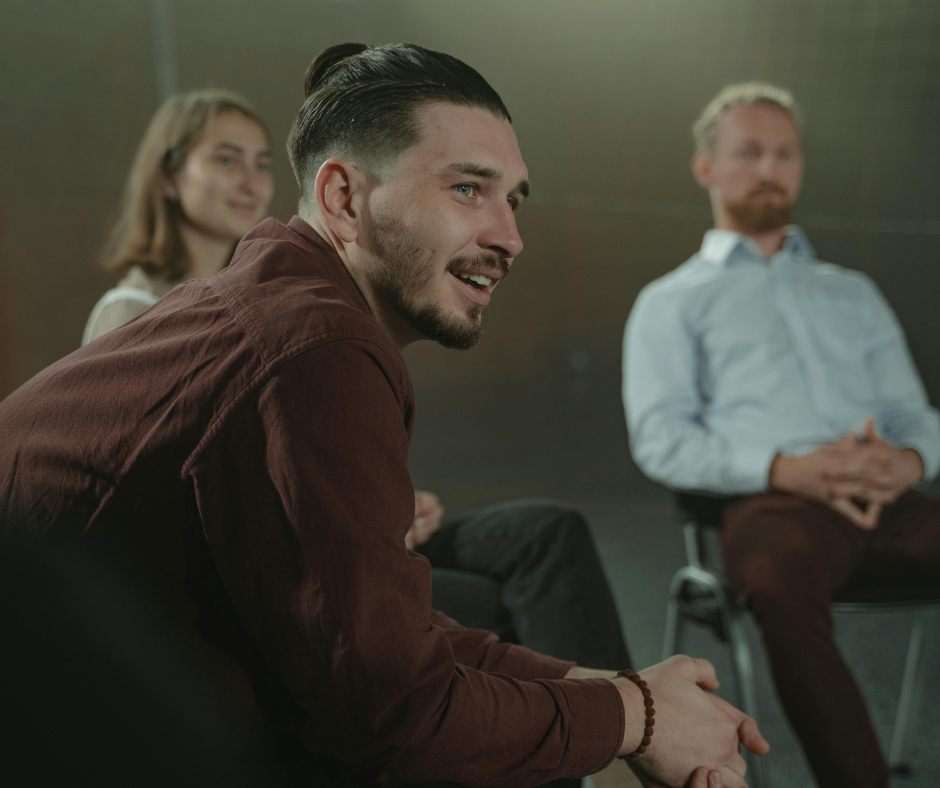
Every year on 10 October, World Mental Health Day asks people to listen and to act in support of mental health across the globe.
This year, the theme is lived experiences heard — real voices, real change, and it asks for something more specific than awareness. It asks that the people who have been through something are the ones who get to describe it.
For World Mental Health Day, veteran and artist Kevin Devonport shares his story in his own words.
| Need support right now?
If you’re struggling or don’t feel safe, you don’t have to wait. Someone is available to talk, day or night.
|
Kevin’s Story
Kevin Devonport left the army at 21. Like many veterans, he found that the transition into civilian life came with many challenges, and in the years that followed, he struggled with addiction and ended up in the justice system more than once.
“Leaving one ‘world’ and entering another is often difficult to readjust,” he says. “Values and codes of conduct within social groups differ but become internalised within the individual, so it’s not just a matter of external circumstances changing. It becomes a matter of trying to re-invent yourself, but there may be aspects of your old identity that you don’t want to let go of.”
For Kevin, the transition was complicated by addiction. “Leaving the military obviously had an effect on my sense of wellbeing,” he explains, “but it was hard to judge, as initially my life was run by addiction, which I wouldn’t solely put down to military service. Addiction brings with it a completely different mindset as your whole psychology changes. So overall it was quite a tumultuous time, to say the least, but also a time that changed my whole life path completely.”
Prison meant another transition. “Going to prison is basically the same principle of leaving one world behind and then readjusting to new surroundings,” he reflects, “but with its own ‘warped’ set of ethics. The first sentence I served was also the point where I had to deal with my addiction, which, though extremely difficult, I managed to overcome.”
Finding Painting
By 35, Kevin was serving another sentence. He would often stop at the window of the prison art class but didn’t have the confidence to walk in, until he was assigned to it anyway.
His first painting was a small landscape; it wasn’t a masterpiece, but it started something that would change his life, becoming the start of a career as an internationally award-winning artist. You can read more about his work in our World Art Day blog.
When we asked what role art plays in his mental health today, Kevin described something profound: “When I discovered painting in prison, it was a means of escape. When I am engulfed in a painting, my external circumstances no longer matter. I could be in my studio painting, at home, on a tropical beach, or in a prison cell—these places do not matter as my head is in that painting.”
Transformation
Kevin has now written a book, Transformation. It draws on his life through military service, addiction, prison, education, and art, and looks at how our hardest experiences can become the foundation for change.
When we asked why he decided to write it, Kevin was clear about his purpose: “I have often been told I should write a book in regards to my life, but I thought it has been done so many times with the same overall narrative, which can often then be a negative influence as crime, addiction, prison can be ‘glamourised’ and seem excitable. I decided to put something out that is more positive, where I think I have discovered a lot of life wisdom through adversity and would like to share this, in that it may help someone else.”
He had rehabilitation in mind, but his ambition is broader. “I do believe absolutely anybody reading the book will be able to take something away in which they can apply to their life.”
Looking back, Kevin reflects, “I do believe that some good comes from adversity,” he says, “and in the long run it quite often turns out to be a lot of good—but at the time this is difficult to see. The harder the battle, the greater the victory. Would I like to go through some of the hardship I’ve faced? Certainly not. But am I now grateful for having that experience? Almost certainly.”
See Kevin’s work at kevindevonportfineart.co.uk, and find Transformation on Amazon.

How We Can Create Real Change Together
Kevin’s story shows what becomes possible when someone is given support and a say in their own path. So how do we make sure that happens more often?
Learn to Listen Well
It often starts closer to home than we think, with how we listen to the veterans in our own lives.
When someone opens up, our instinct is often to offer advice or a solution. However, sometimes the best thing we can do is offer neither of these. Let them lead the conversation, and don’t ask for details about their service that they haven’t offered. Questions about combat or what they’ve seen can feel intrusive, however well-meant.
Believe what they tell you, even if it isn’t what you expected or what you’ve heard from someone else. It also helps to get comfortable with silence. Sometimes people need a moment to find the right words.
Most of all, keep checking in. One conversation is a start, but knowing you’ll still be there next week and the week after is what builds the trust to keep talking. If they need more support than you can give, the services listed below are available.
Supporting Veteran-Led Initiatives
The veterans in our communities do amazing things: they create peer support networks, build businesses and charities, and launch initiatives designed by and for people who’ve served. Care after Combat exists because veterans and their supporters recognised a gap in services for veterans in the justice system. When you support veteran-led organisations, you’re supporting change guided by real experience.
Advocating for Better Systems
This might mean supporting campaigns for better mental health access, pushing for veteran-aware training for healthcare professionals, or demanding that the justice system recognises the specific needs and experiences of veterans. It means using your voice to amplify what veterans are saying they need.
Including Veterans in Decision-Making
When organisations and policymakers design services for veterans, veterans should be consulted beforehand or be in the room making those decisions. In many situations, it means asking ourselves “who is responsible for shaping this decision?” and ensuring the answer includes people with lived experience.
For example, when a mental health service is being designed, the veterans who’ll use it should help shape it. This is fundamental to creating systems that work for the people they are being designed for.
Mental Health Services for Veterans
If you’re a veteran struggling with your mental health, or if you’re supporting a veteran who is, there are services available. Here’s what’s out there:
Care after Combat
We specialise in supporting veterans in the justice system, offering one-to-one mentorship from people who understand military service and a 24/7 helpline (0300 343 0255) for veterans who need our help. Get in touch with us if you need support.
Combat Stress
Provides specialist mental health and wellbeing support for veterans. They offer therapy, support groups, crisis support, and a 24-hour helpline (0800 138 1619). Learn more about Combat Stress.
Op COURAGE
The NHS Veterans’ Mental Health and Wellbeing Service provides specialist mental health care and support for service leavers, reservists, veterans and their families in England. Find out more about Op COURAGE.
The Royal British Legion
Offers comprehensive support to veterans and their families, including mental health services, financial assistance, and employment support. They also run community programmes and events that foster connection and wellbeing. Visit The Royal British Legion.
SSAFA
Provides practical and financial support to veterans and their families, including mental health signposting and emergency assistance. Learn more about SSAFA.
Your GP
Your GP is a starting point if you’re struggling with mental health. They can refer you to talking therapies, counselling, or other mental health services available through the NHS. Don’t hesitate to reach out to your GP if you’re experiencing depression, anxiety, PTSD, or other mental health challenges.
Turning Lived Experience Into Better Support
World Mental Health Day reminds us that listening matters, but listening alone isn’t enough.
Veterans with lived experience should have meaningful opportunities to shape the services, policies and decisions that affect them. That means listening to individual experiences, recognising that no two veterans are the same, and turning what we hear into better support.
At Care after Combat, that principle sits at the heart of our work. Project Phoenix is built around individual relationships, peer understanding, and support shaped around the person—not assumptions about what a veteran ought to need.
Real voices create real change when they don’t just tell the story; they help shape what happens next.
If you or someone you know needs support, reach out to us.